
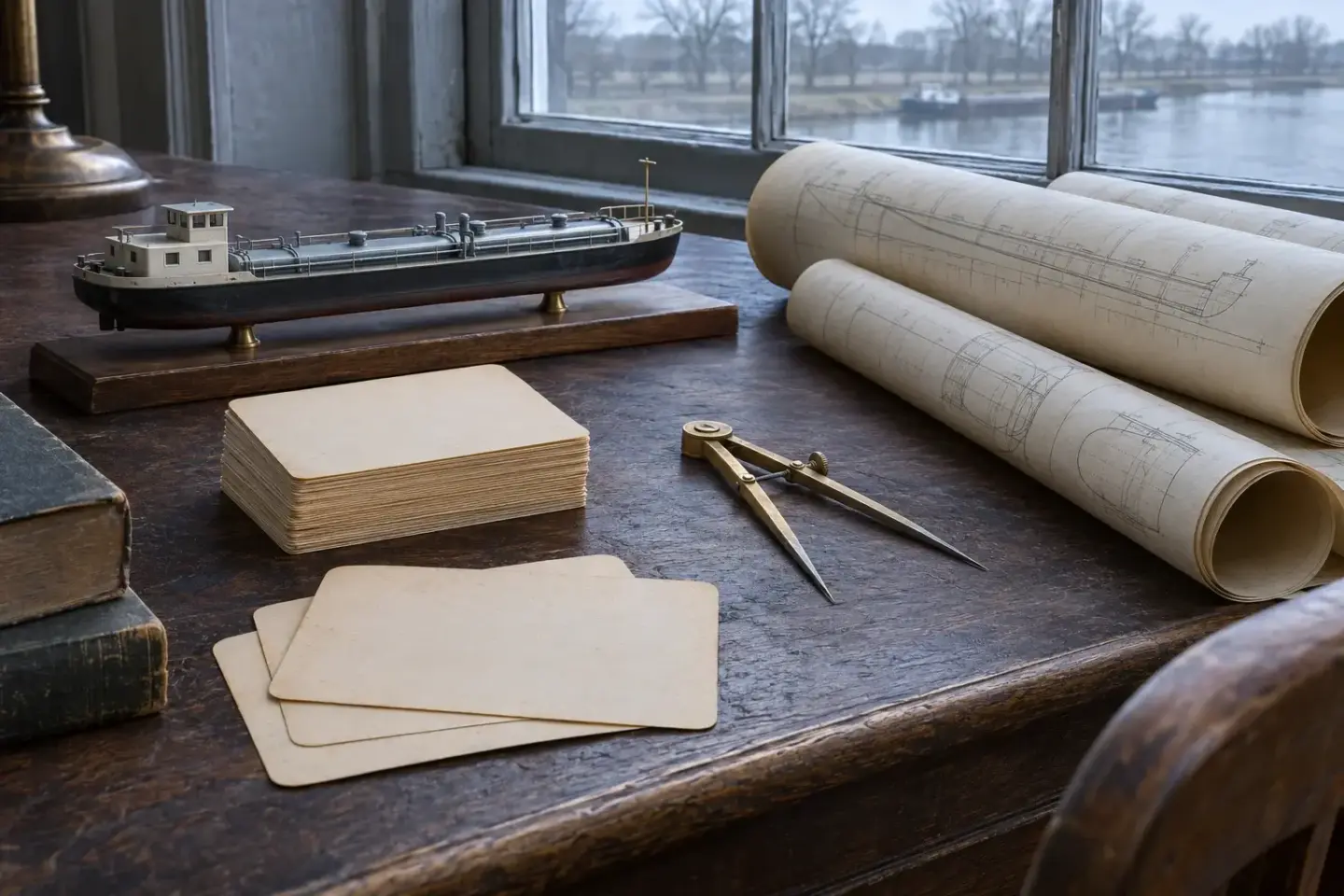
A useful project register has to distinguish an event from an operating status. This small register identifies early inland LNG examples through owner, port and supplier material. It is an editorial reference checked on 10 November 2026, not a live fleet database or a reconstruction of every entry in the former Observatory.
The old address referred to an LNG IWT project database. Its subject remains useful: which installations were documented, by whom, and at what point in their development? The answer becomes less useful if a historical announcement is silently labelled “operational” years later.
Three vessels, three carefully limited records
| Vessel or event | What the source establishes | Date and limit |
|---|---|---|
| Argonon | Deen Shipping lists build year 2011 and dual-fuel Caterpillar main engines. | Owner page read November 2026; no voyage or actual fuel-consumption verification. |
| Greenstream | Titan describes LNG removal before a return to the shipyard, with fuel transferred to its sister vessel. | Supplier announcement dated 10 May 2016; one described operation. |
| Green Rhine | Titan identifies the vessel receiving LNG from Greenstream at Moerdijk. | Same May 2016 event; not a present bunkering service offer. |
Sources: Deen Shipping’s Argonon page and Titan’s 2016 transfer announcement. Names are retained as the respective sources present them. The register does not infer a current owner, charter, schedule or fuel share from these records.
What each example helps explain
Argonon offers a useful starting point for the distinction between an LNG-capable system and the fuel actually consumed during an individual voyage. Equipment specifications and operational measurements answer different questions. If a historical article gives a particular blend percentage, establish whether that is a design description, a reported test condition or a measured annual average before comparing it with another vessel.
The Greenstream transfer demonstrates why a project history should include maintenance events, not only launches. A fuel installation has a life beyond normal propulsion: a vessel may need to enter a yard, remove stored fuel or coordinate a specialist service. The supplier account documents one such event. It is not a procedure to reproduce; a real operation needs its own competent personnel, approved arrangements and current requirements.
Port of Rotterdam’s historical emergency-response study also discusses early LNG vessels, including Argonon. It provides context for how emergency services approached the emerging technology. Its date and purpose matter: a historical study cannot certify that equipment or an emergency plan meets present requirements. Read the port-hosted study.
How to extend this register responsibly
For each proposed entry, record the vessel identifier when an authoritative source supplies it, the organisation publishing the evidence, the publication date and the exact event. Keep a source snapshot separately from the editorial description. Add a second field for present status and leave it unknown unless a current source establishes it.
A cancelled project can still be informative. So can a demonstrator, a design study or an installation later modified. The mistake is to place them in one undifferentiated count. Separate announced, built, tested and documented-in-service evidence; record the date of each observation rather than assuming a permanent state.
Readers comparing fuels should begin with the LNG overview. Readers seeking a supplier today need current commercial confirmation. This register serves a narrower purpose: preserving identifiable evidence of how inland LNG developed, with enough context to stop the past being mistaken for today’s fleet.